
Diamond engagement rings: Understanding the 4C’s
22 April 2023 • 3 min read
Are you planning on proposing to the love of your life? Before you begin looking for an engagement ring, you first need to understand the 4C’s — the colour, clarity, carat weight and cut of a diamond.
Learning about the 4C’s is an important part of diamond education, it is the grading system used to evaluate the quality and price of a diamond. Developed by the Gemological Institute of America (GIA), these are applied to all diamonds, including natural and lab diamond engagement rings.
Using the 4C’s will assist you to better understand that not every diamond is the same and each has its own unique qualities. Knowing this will help you select the right ideal diamond for your ring.

Below, we break down the 4C’s so you can understand the criteria and which one is most important to you.
Cut
The cut of your diamond dictates the most identifiable visual difference of the 4C’s. How your diamond is cut will determine how the stone is polished, faceted and proportioned. It also dictates the brilliance, which refers to how the diamond reflects light.

The shape and the amount of sparkle your partner desires most will assist you in selecting a cut. Popular cuts include:
- Asscher
- Cushion
- Emerald
- Marquise
- Oval
- Pear
- Radiant
- Round
Colour
The colour of a diamond varies across a D-Z scale. This starts from D, completely colourless, all the way through to most yellow light yellow, Z. The colour progressively changes from colourless to colour as it climbs the scale. The closer the diamond is to grade D, the most colourless it will be, meaning it will be more expensive.

While the colour of a diamond does interfere with the diamond’s tint, the cut of the diamond will also impact the visibility of a colour. A round diamond makes it harder to see a lower colour grade, whereas it is easier to see the same colour grade on an oval diamond.
Clarity
Like colour, a diamond’s clarity has a scale ranging from flawless (FL) to included (I). The scale refers to the number of imperfections within the stone. The fewer flaws a diamond has, the rarer and more expensive it is.

Many prefer a diamond to be as flawless as possible. However, most blemishes are not visible to the naked eye and can only be viewed under magnification. This means you can get a lower ranking clarity on a stone that looks just as impressive as one of the higher rankings.
Carat
The final 4c is the carat weight. This refers to the actual weight measurement of the diamond. The bigger the diamond, the increase in the stone’s value.
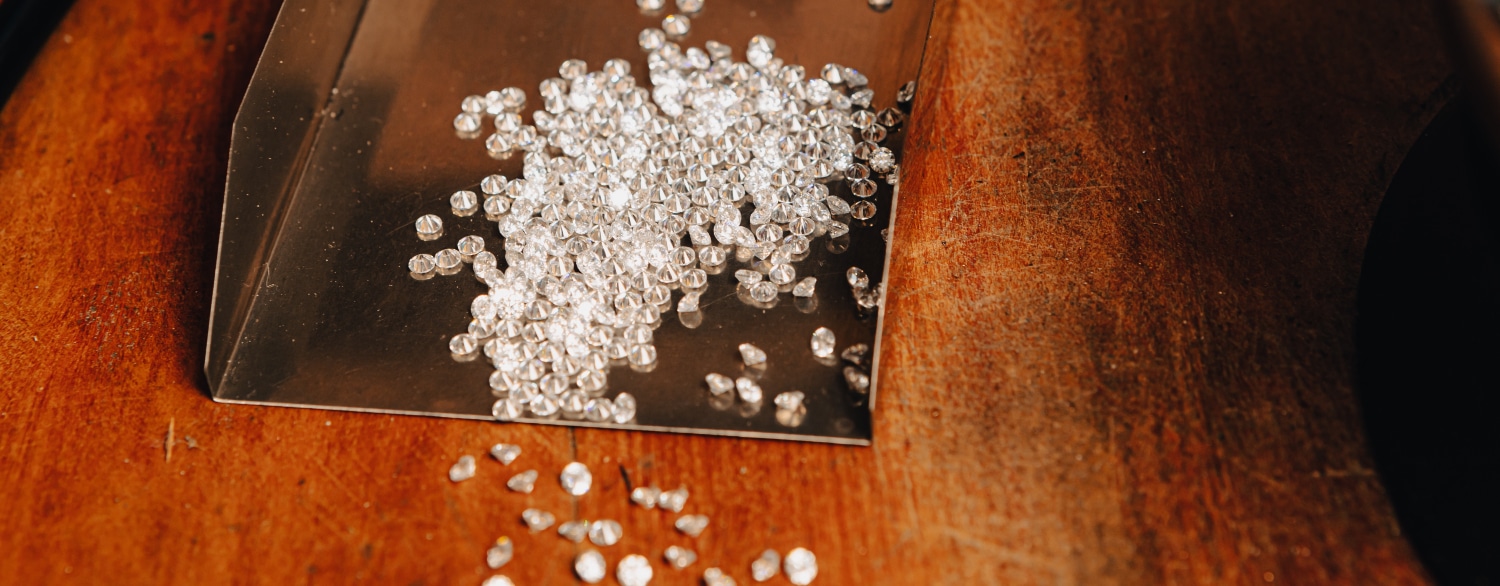
It is important to note that while the carat weight can impact the diamond’s size, it is not always the case. The depth of a stone and the chosen setting and cut can make a diamond of a smaller carat appear more significant than one that has a bigger carat but is shallower in depth.
Now that you understand the 4C’s, we invite you to explore our website. Ernesto Buono Fine Jewellery is home to some of the finest lab grown diamonds found online.
Have a question about the 4C’s? Send us an enquiry. Our experts will happily guide you through the criteria and how they can impact your final decision.
Related Articles

Engagement Ring Shopping for Couples: Tips for Making the Moment Memorable
7 November 2025
A New Tradition in the Making Forget the old rules, more and more couples are choosing to shop[...]Read More
Behind the Bench: How Our Master Jeweller Ernesto Creates Custom Rings
6 November 2025
Introduction: More Than Just Jewellery Custom rings aren’t just about diamonds and metal — they’re about memories, meaning,[...]Read More
Unveiling Elegance: The Ultimate Guide to Choosing a 3ct Diamond Ring for Every Occasion
24 June 2025
When it comes to celebrating life’s most cherished moments, nothing embodies elegance quite like a 3ct diamond ring.[...]Read More
Engagement Ring Shopping for Couples: Tips for Making the Moment Memorable
7 November 2025
A New Tradition in the Making Forget the old rules, more and more couples are choosing to shop[...]Read More
Behind the Bench: How Our Master Jeweller Ernesto Creates Custom Rings
6 November 2025
Introduction: More Than Just Jewellery Custom rings aren’t just about diamonds and metal — they’re about memories, meaning,[...]Read More
Unveiling Elegance: The Ultimate Guide to Choosing a 3ct Diamond Ring for Every Occasion
24 June 2025
When it comes to celebrating life’s most cherished moments, nothing embodies elegance quite like a 3ct diamond ring.[...]Read More
Ernesto Buono
Ernesto Buono is an Italian‑trained master jeweller and the founder of Ernesto Buono Fine Jewellery, a bespoke jewellery atelier based in Parramatta, New South Wales. He discovered his passion for jewellery making at age 17, honed his craft at Italy’s Accademia delle Belle Arti and later at the Enmore Design Centre TAFE in Sydney, and has spent over two decades creating custom engagement rings, wedding bands and fine jewellery that blend traditional craftsmanship with modern design.